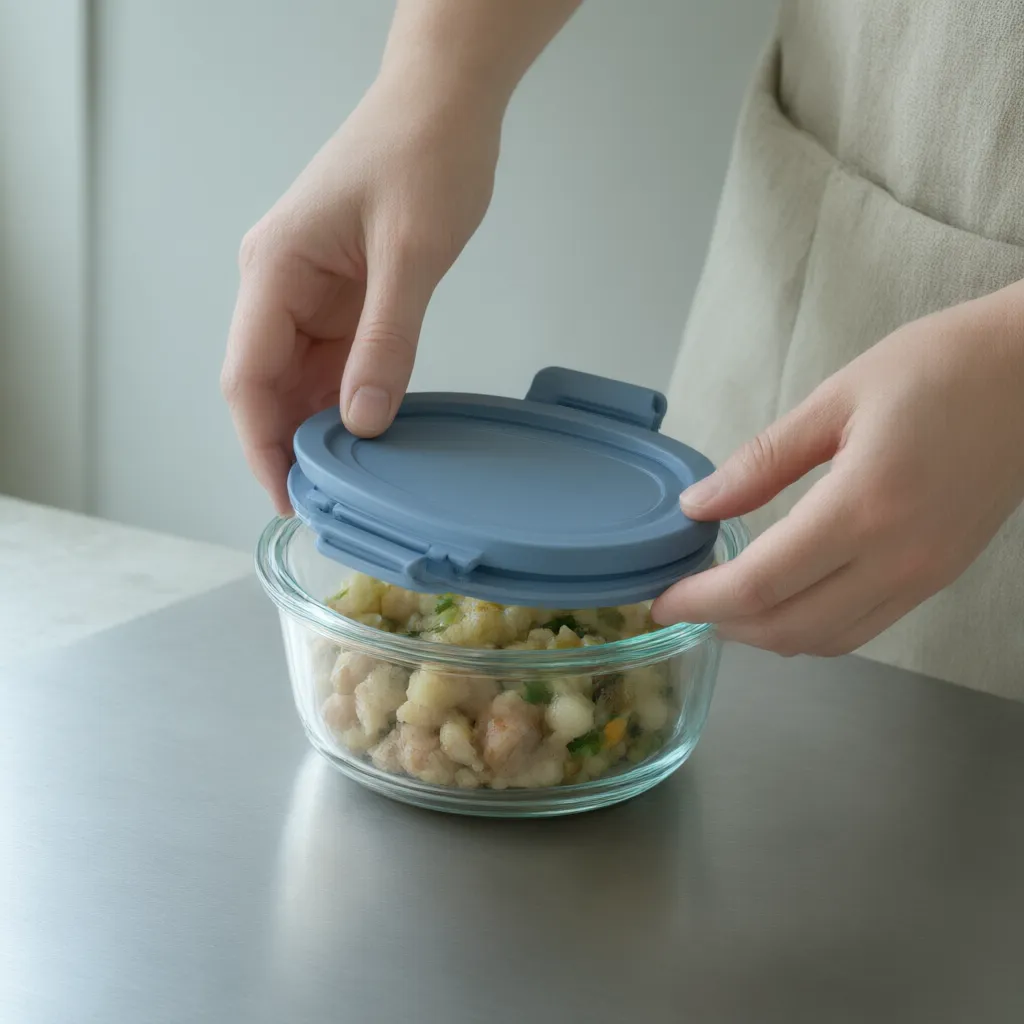
The comparison
Six points, read across
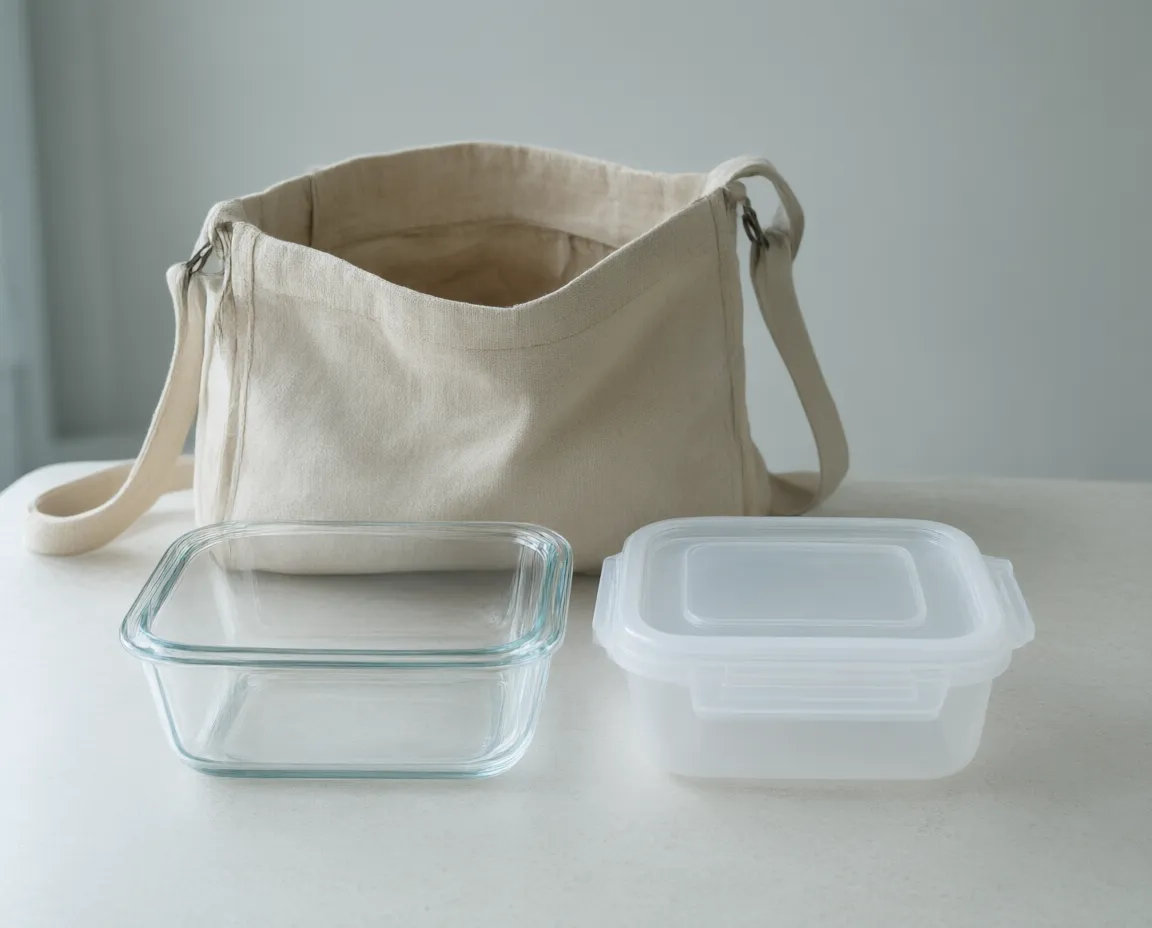
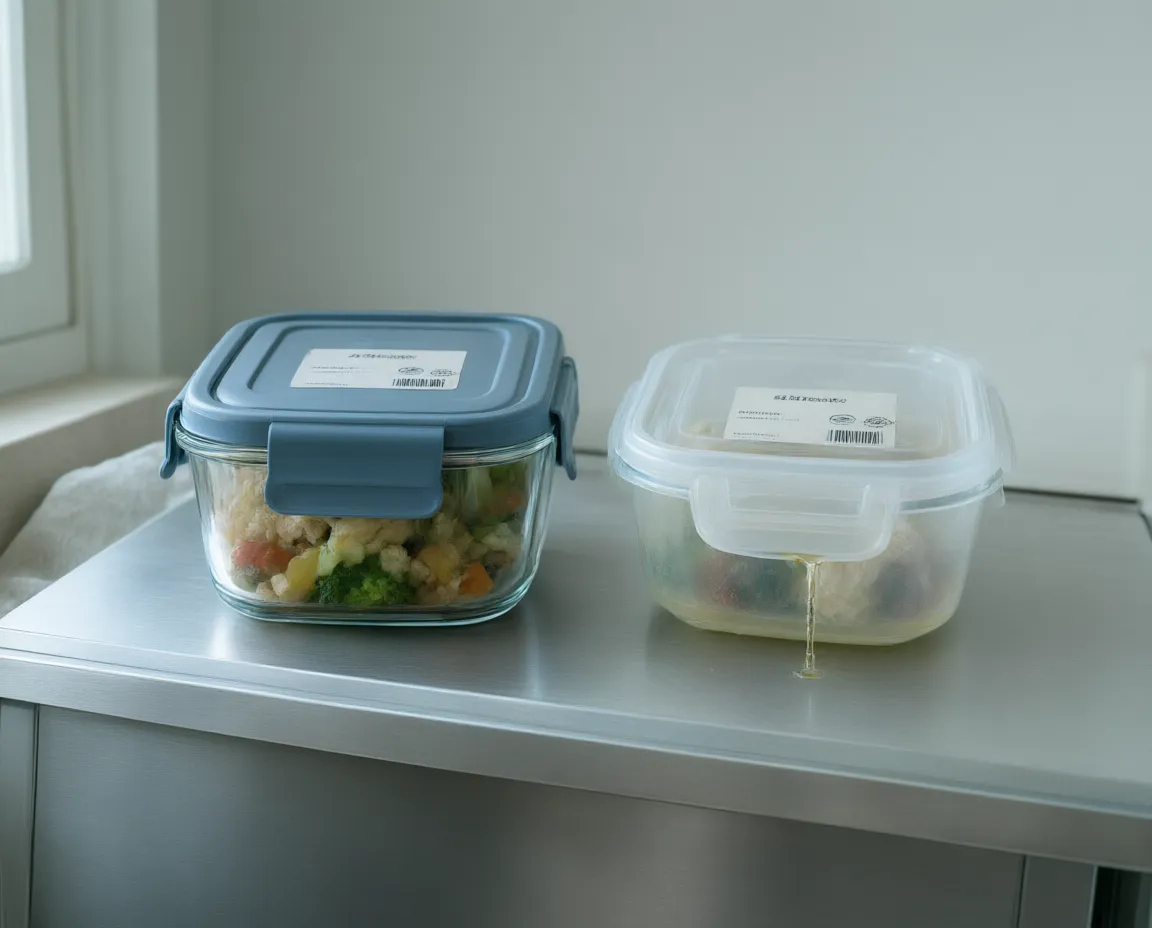
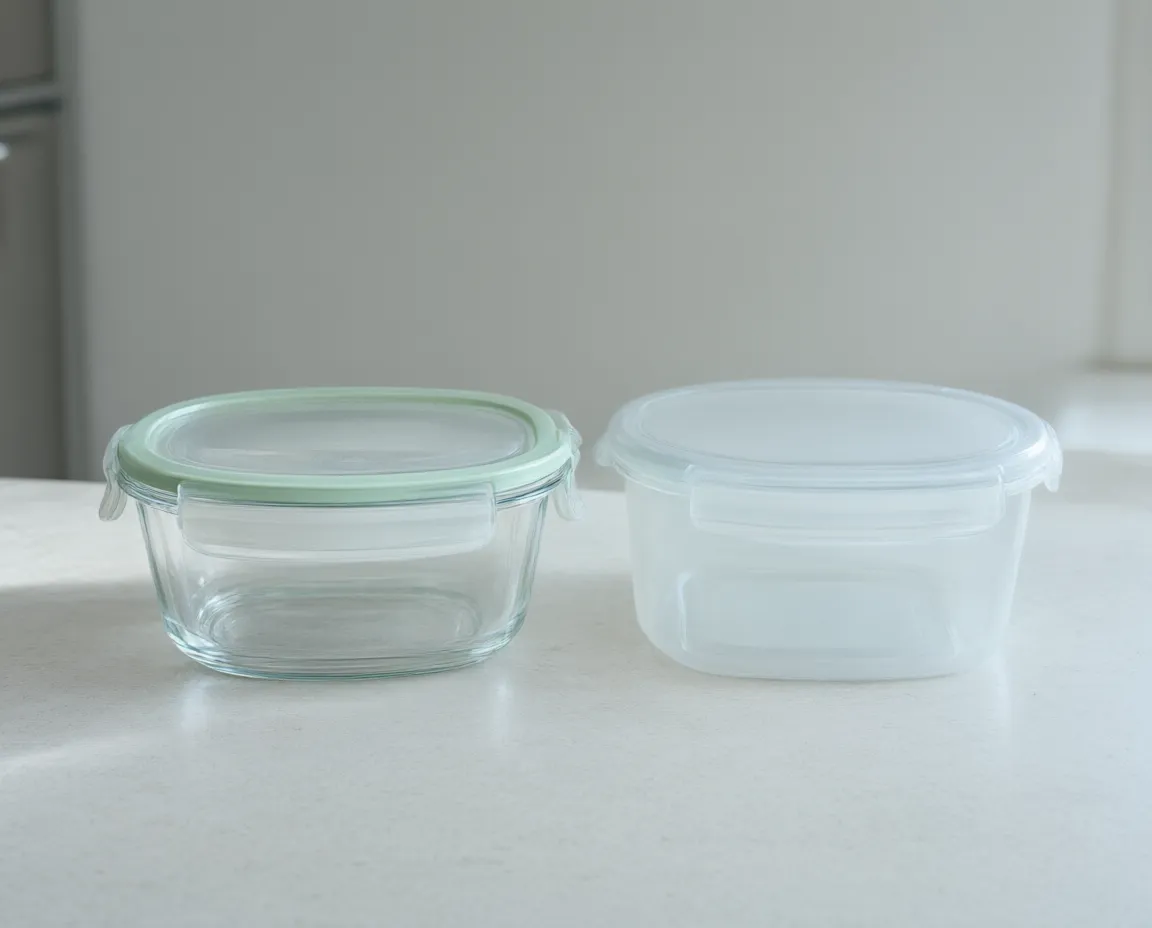
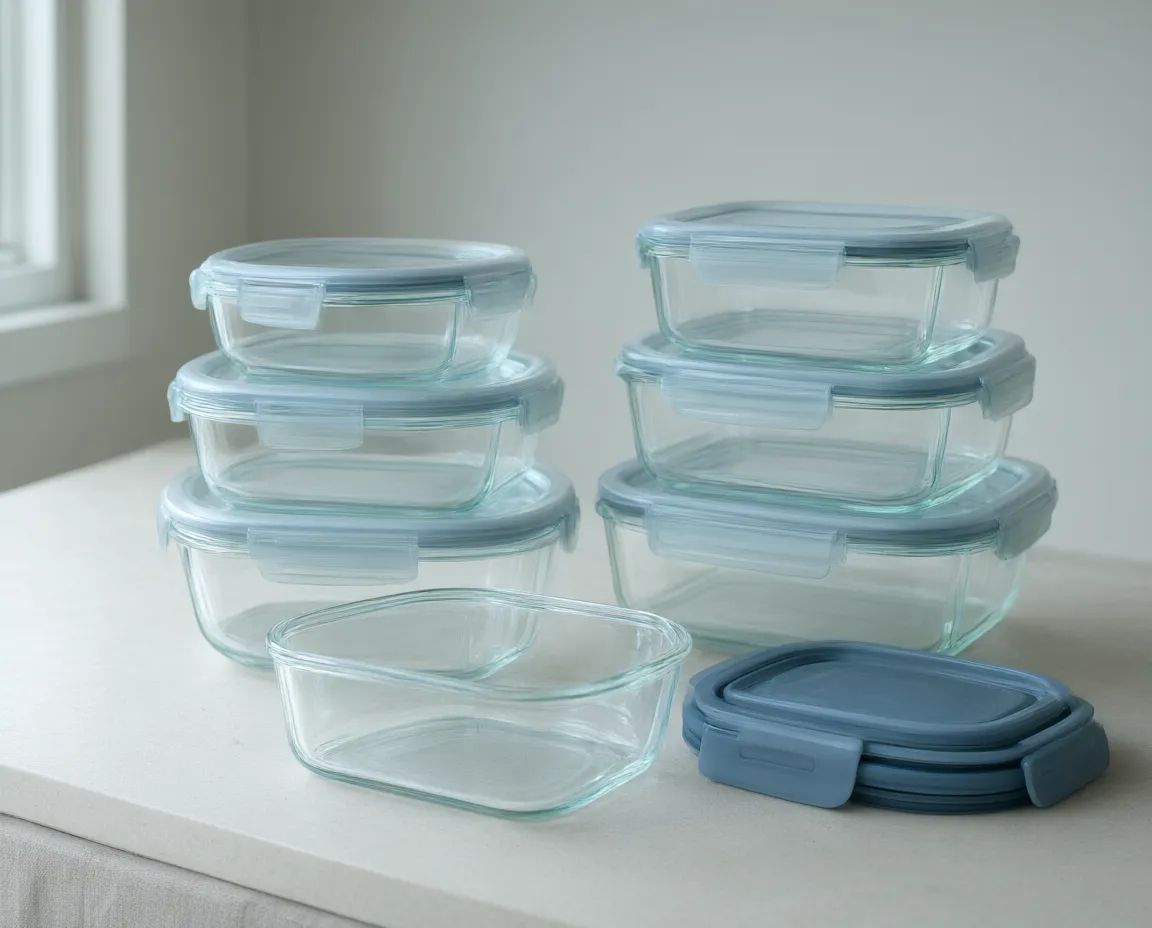
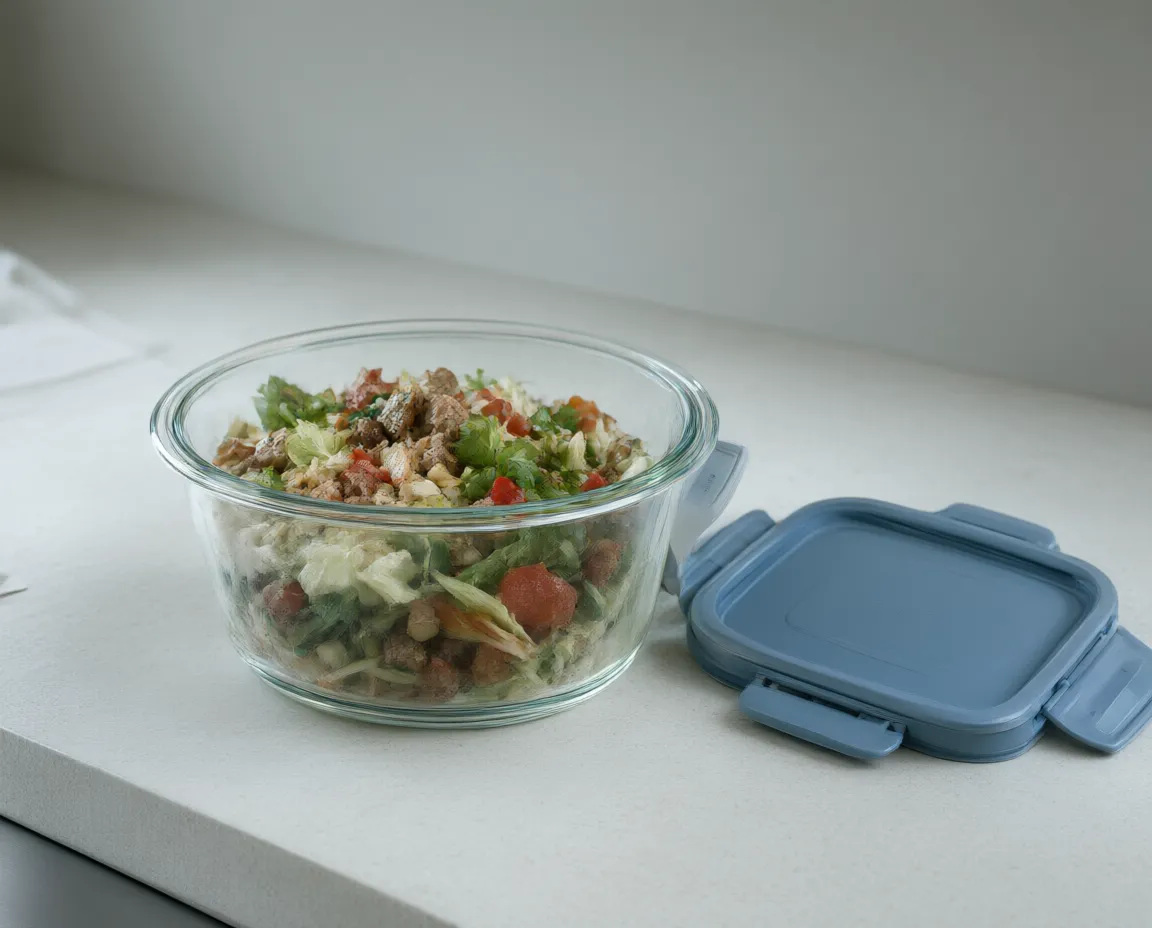
Same lunch, same three containers. In every photo below, glass is on the left and plastic on
the right.
1. Weight in a work bag
Glass is noticeably heavier than plastic — an empty glass container is a weight you can
tell apart in your hand — and that difference is on your shoulder all day. Carry two or three
meals in and the bag is heavier by the time you reach the office.
If you walk, cycle or take a packed train, weigh this one first. Nothing else on this list
changes your morning as much.
Left: glass. Right: plastic. Same volume.
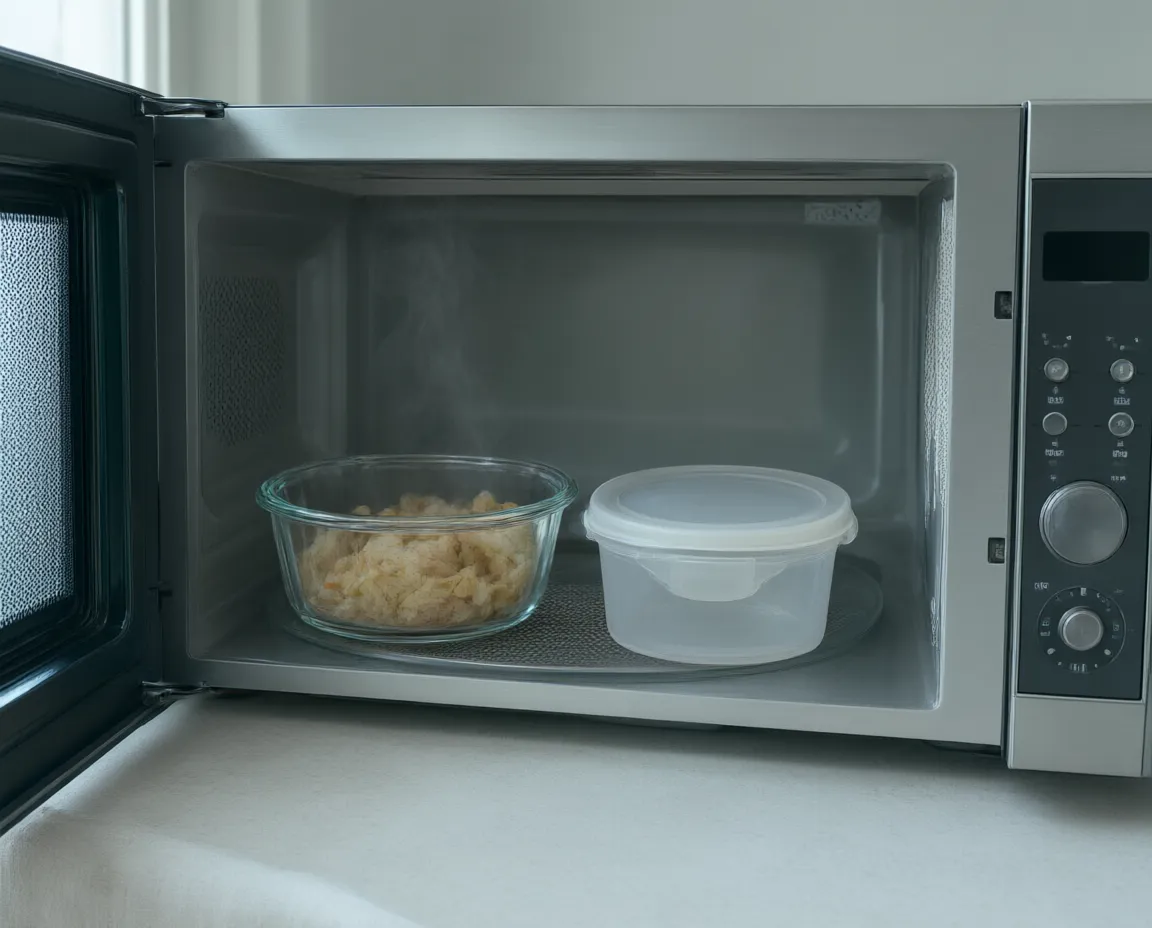
2. Reheating
Glass goes into the microwave as it is, and because the container stays cool you can lift it
out with bare hands. It also goes into a conventional oven without the lid — useful if
you want to crisp something back up rather than steam it.
Plastic reheats fine, but lids usually have to come off, and a thin container can flex when
the food is hot. Neither material enjoys an oven: plastic should not go near one.
Left: glass, lid off, straight in. Right: plastic, lid off too.
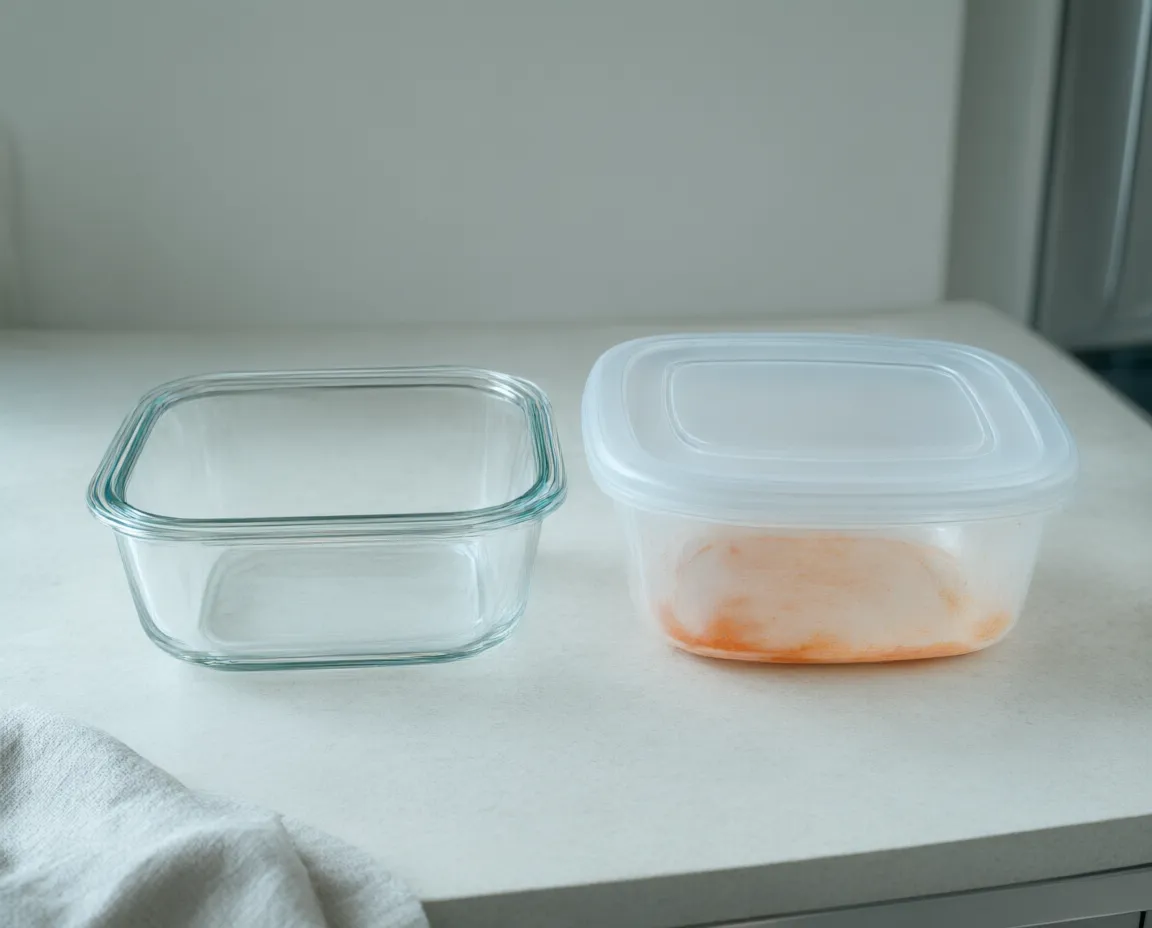
3. Stains and smells
This is where glass earns its keep. Tomato sauce, curry, beetroot — glass holds colour on
its surface for a wipe, not a soak. It also gives up smells: an empty glass container smells
like an empty glass container.
Plastic is porous enough that oils work into it over months. A tomato-heavy week will leave a
faint orange ghost that no amount of washing-up liquid removes, and last night's curry tends
to linger.
Left: glass after curry. Right: plastic after the same curry.
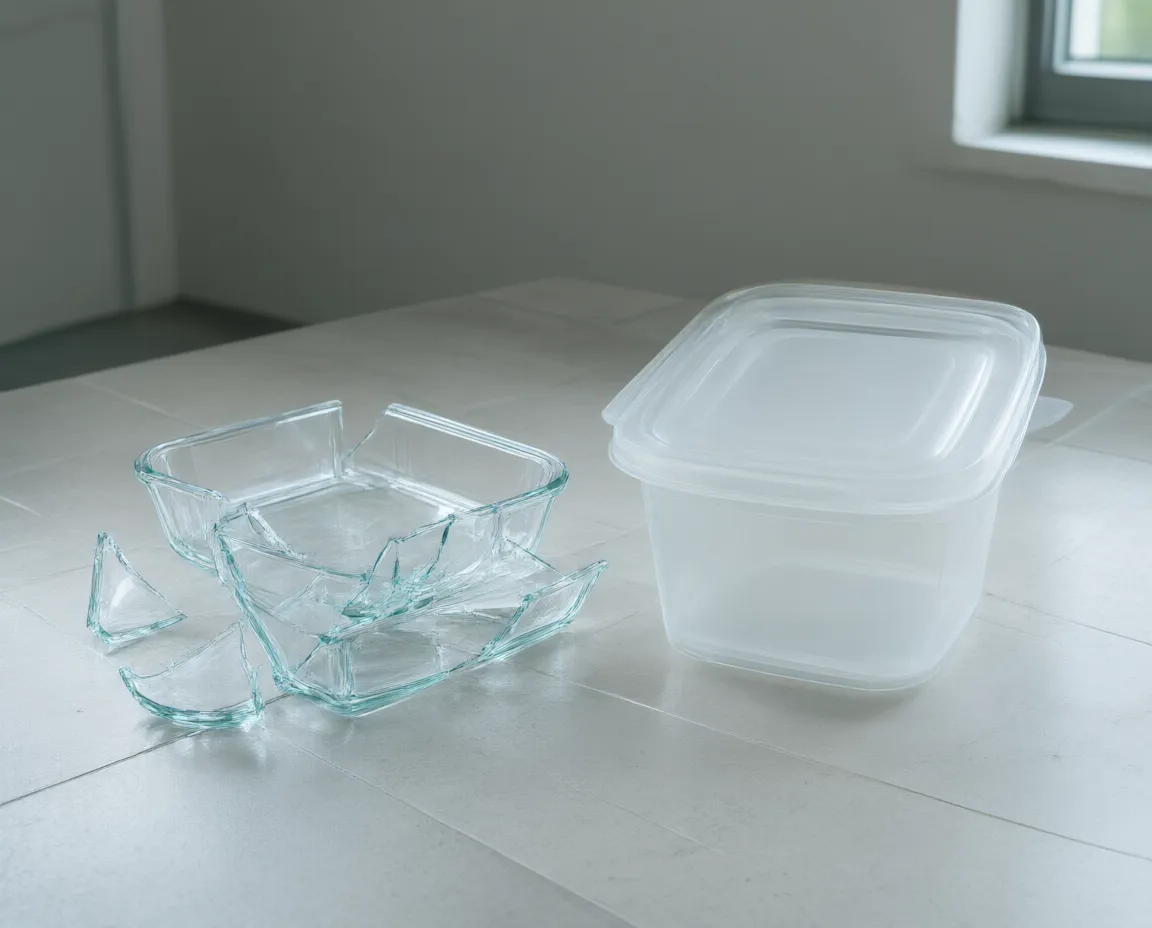
4. Breakage
Glass can break. Drop it on a tiled kitchen floor and you are sweeping. Borosilicate handles
temperature changes far better than ordinary glass, so it does not shatter from hot food in a
cold container, but a knock off the counter is still a knock off the counter.
Plastic in a work bag, at the bottom of a rucksack, in a child's hands: it survives. That is a
real advantage and it is worth saying so plainly.
Left: glass, dropped. Right: plastic, dropped.
5. How well the lids seal
Both types seal well when they are new and undamaged. The difference shows up later. A glass
container keeps its rigid rim, so the rim holds its shape through years of washing and a lid
that presses on snugly today goes on snugly later. A plastic container deforms slightly in the
dishwasher and the seal loosens with it.
Practical caveat: any lid, on any material, will leak if you fill the container to the brim or
put soup in it sideways. Leave a finger's width of headroom.
Left: rigid glass rim. Right: plastic rim after the dishwasher.
6. Price
Plastic simply costs less per container. If you are kitting out a shared kitchen or buying
for a student flat, that gap is the whole decision.
Glass costs more up front. Whether it costs less over time depends entirely on whether you
keep it — which is the honest answer, not a sales one.
Left: glass, bought once. Right: plastic, bought often.
Where plastic is the better choice, plainly.
Plastic is lighter to carry, cheaper to buy, and it does not break. If your containers travel
in a rucksack, get knocked around, live in a shared fridge, or you just need a lot of containers
without spending much, buy plastic and do not feel bad about it. There is no version of this
comparison in which plastic is the wrong purchase for everybody.